Department of Biochemistry

Kyushu University Faculty of Medical Sciences

Ikenouchi Lab

  • Epithelial Cell Biology

    In the textbooks, cell membranes are described as “gray two lines”. But actually, cells make many different lipid species. Although lipids are the main component of cells together with proteins, the functions of lipids or the physiological meaning of diversity of lipid species are not well elucidated.
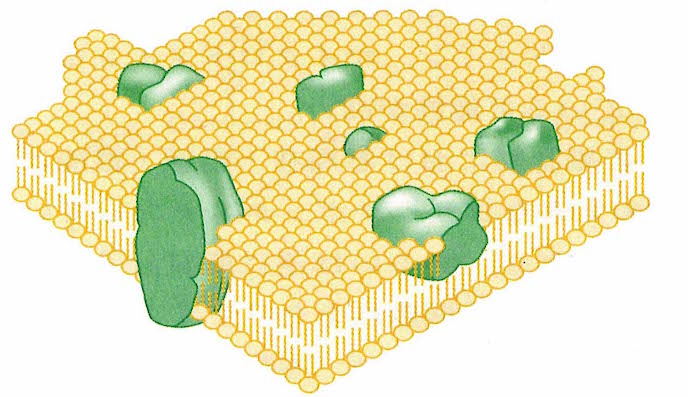
    SingerとNicolsonの細胞膜モデル(1972)

    Membrane model of Singer & Nicolson (1972)

    The aim of our study from the viewpoint of basic science is to clarify the roles of individual lipid species by using epithelial polarity and cell adhesion as experimental systems. The research purpose for clinical science is to find novel therapeutic targets in diseases correlated with epithelial-polarity disorders and epithelial-mesenchymal transition, such as cancer, polycystic kidney disease and pulmonary fibrosis.
  • Research

    Epithelial cells are constitutively polarized to play fundamental functions such as vectorial transport. There are two membrane domains of epithelial cells, the apical membrane and basolateral membrane. These membrane domains are separated by cell adhesion apparatus. Most of our previous studies concerning epithelial polarity and cell adhesion have been focused on identification of new genes or elucidation of protein-protein interactions(for example, tricellulin of FRMD4A)

    Although lipids are the main component of cells together with proteins, the functions of lipids or the physiological meaning of diversity of lipid species are not well elucidated. To analyze membrane lipids, we recently developed a new method to determine the lipid composition of plasma membrane (Ikenouchi et al. 2012).Taking advantage of this method, we succeeded in clarifying the difference of lipid composition between the apical membrane and the basolateral membrane and found that sphingomyelin plays essential roles in the formation of microvilli (Ikenouchi et al. 2013).

    Furthermore, we identified several epithelial-cell specific lipids by comparing the lipid profile between epithelial cells and mesenchymal cells, taking advantage of previously established cell lines (Ikenouchi et al.2003).Currently we try to elucidate functional roles of these lipids by examining whether knock-down of biosynthetic enzymes in cultured epithelial cells affect epithelial polarity and cell-cell adhesion.

    The aim of our study from the viewpoint of basic science is to clarify the importance of individual lipid species by using epithelial cells as an experimental model. The research purpose for clinical science is to find novel therapeutic targets in diseases correlated with epithelial-polarity disorders and epithelial-mesenchymal transition, such as cancer, polycystic kidney disease and pulmonary fibrosis.

  • Members

    Junichi Ikenouchi

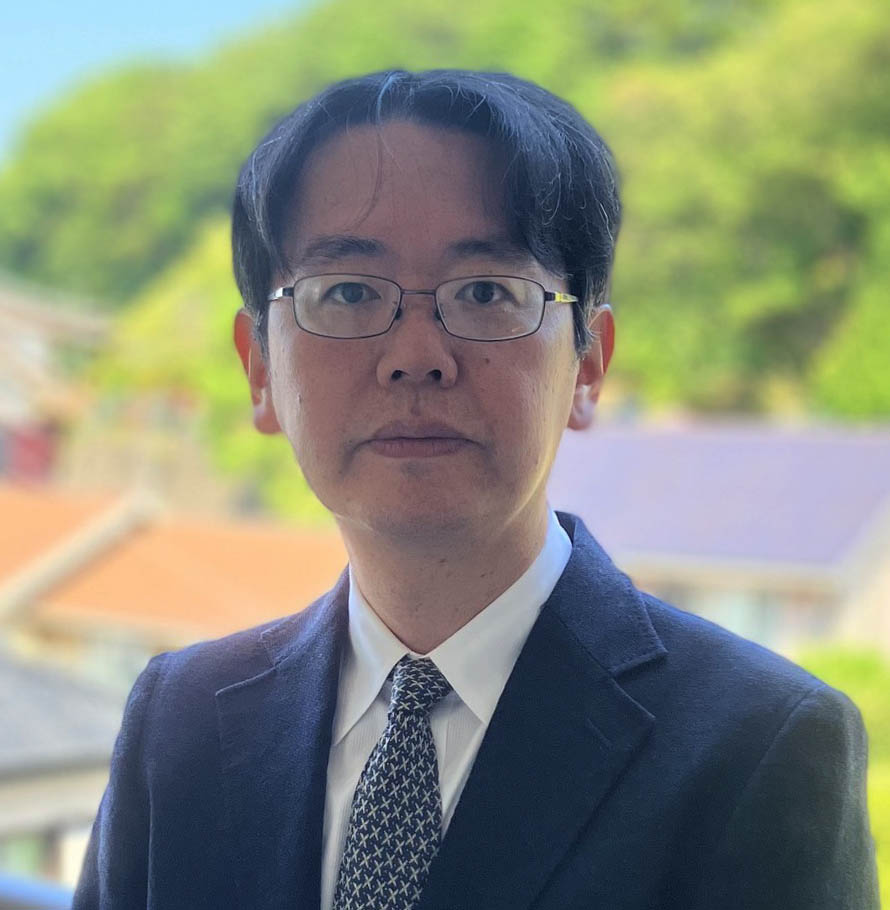
    Professor Junichi Ikenouchi

    M.D., Ph.D.
    Biography

    Lecturer

    Kenji Matsuzawa Ph.D.

    Assistant Professor

    Yuma Cho Ph.D.
    Atsushi Matsumoto Ph.D.

    Technical Assistant

    Kayoko Ono
    Mariko Kaneshiro
    Yoko Toyota
    Sawako Watanabe

    Administrative Assistant

    Chikako Yamauchi

    D3

    Sachiko Inoue (Medical Sciences)

    Yuki Maekawa (Systems Life Sciences)

    Asahi Yokozaki (Systems Life Sciences)

    D2

    Chowdhury Tahsina Rifat (Medical Sciences)

    D1

    Yuta Takahashi (Systems Life Sciences)

    M1

    Zhao Jiahui (Systems Life Sciences)

    B4

    Syunsuke Igarashi

    Lab photos

    Recent photos are uploaded to  Facebook page.

  • Publications

    Recent Publications

    See all

    († : Corresponding author)
    (* : Co-first author)

    • CaMKII nucleates an osmotic protein supercomplex to induce cellular bleb expansion

      Fujii Y , Sakai Y , Matsuzawa K , †Ikenouchi J.

      EMBO J. 2026 Feb 3. Online ahead of print. [Pubmed]

    • Chemotherapy resistance due to epithelial-to-mesenchymal transition is caused by abnormal lipid metabolic balance

      *Matsumoto A , *Inoko A , Tanaka T, Konishi G, Hosoda W, Kojima T, Ohnishi K, †Ikenouchi J.

      Elife. 2026 Jan 12:13:RP104374. [Pubmed]

    • A steady-state pool of calcium-dependent actin is maintained by Homer and controls epithelial mechanosensation

      *Matsuzawa K , *Suzuki M , Cho Y , Fujinaga R , †Ikenouchi J.

      Proc Natl Acad Sci U S A. 2025 Oct 28;122(43):e2509784122. [Pubmed]

    • Rho-ROCK liberates sequestered claudin for rapid de novo tight junction formation

      Cho Y , Taniguchi A , Kubo A , †Ikenouchi J.

      Elife. 2025 Jul 24:13:RP102794. [Pubmed]

    • D-π-A Fluorophores with Strong Solvatochromism for Single-Molecule Ratiometric Thermometers

      Hori A, Matsumoto A, Ikenouchi J, †Konishi G.

      J Am Chem Soc. 2025 Mar 19;147(11):9953-9961. [Pubmed]

    • A sustained calcium response mediated by IP3 receptor anchoring to the desmosome is essential for apoptotic cell elimination

      Cho Y, Koyama-Honda I, Tanimura A, Matsuzawa K, † Ikenouchi J.

      Curr. Biol. 2024 Sep 17:S0960-9822(24)01173-4. [Pubmed]

    • Fluorescent Solvatochromic Probes for Long-Term Imaging of Lipid Order in Living Cells

      Tanaka T, Matsumoto A, A S Klymchenko, Tsurumaki E, † Ikenouchi J, † Konishi G.
      Adv Sci. 2024 Mar 11:e2309721. [Pubmed]

    • Cytoplasmic zoning in membrane blebs

      Fujii Y, †Ikenouchi J.

      J Biochem. 2024 Feb 25;175(2):133-140.  [Pubmed]

    • Accumulation of annexin A2 and S100A10 prevents apoptosis of apically delaminated, transformed epithelial cells

      Ito S, Kuromiya K, Sekai M, Sako H, Sai K, Morikawa R, Mukai Y, Ida Y, Anzai M, Ishikawa S, Kozawa K, Shirai T, Tanimura N, Sugie K, Ikenouchi J, Ogawa M, Naguro I, Ichijo H, †Fujita Y.

      Proc Natl Acad Sci U S A. 2023 Oct 24;120(43):e2307118120. [Pubmed]

    • Cholesterol rich domain formation mediated by ZO proteins are essential for tight junction formation

      Shigetomi KOno YMatsuzawa K,†Ikenouchi J.

      Proc Natl Acad Sci U S A. 2023 Feb 21;120(8):e2217561120. [Pubmed]

    See all

  • Recruitment

    We are in the recruitment of graduate students, postdoctoral and research assistant.
    Please feel free to contact us.

  • Contact

    Kyushu University, Department of Biochemistry, Faculty of Medical Sciences
    Professor Junichi Ikenouchi
    TEL: TEL: +81-92-642-6096
    E-Mail : ikenouchi.junichi.033(at-mark)m.kyushu-u.ac.jp
    3-1-1 Maidashi, Higashi-ku, Fukuoka 812-8582, Japan